
Category Archives: miscellaneous

What is Art Deco?

Art Deco was an international design movement popular in the 1920’s and 30’s, focused on themes of luxury, technology, modernization, and craftsmanship. The movement was born in Paris, an outgrowth of the previous Art Nouveau movement that was declining in popularity at the turn of the 20th century.

Art Nouveau (French for “new art”) focused on the importance of artisan craftsmanship, and typically featured organic motifs of flowers & plants, and/or highly stylized curved forms. Art Deco retains many of the same inherent aesthetic qualities as Art Nouveau, but was considered a modernization of the style, and until a comprehensive book was written about it, following an exhibition at the Minneapolis Institute of Arts in 1971 by Bevis Hillier, Art Deco had often been referred to as “Style Moderne.”

Hillier’s book was titled Art Deco of the 20s and 30s, which first popularized the term. He took his title from an exposition held in France in 1925, the Exposition Internationale des Arts Décoratifs et Industriels Modernes (truncating the words “Arts Décoratifs”). The Exposition was organized by a collective of French artists known as La Société des Artistes Décorateurs (the society of the decorator artists), and its purpose was to demonstrate French artists’ and designers’ dominance as leaders in the world of luxury design. The French are not known for their modesty!  The exposition was originally slated for 1915, but was postposted due to WWI, which had the unlikely effect of expanding the historical influences to the designs presented.

With the increasing ability to travel abroad, and international interest in archeology fueled by discoveries such as the lost city of Pompeii and King Tutankhamun’s intact tomb, artist and designers began incorporating exotic cultures and primitive arts into their design themes. These influences are pervasive throughout the Art Deco movement – Egyptian motifs are prevalent, as well as Grec0-Roman, Babylonian, Azteca, etc. and can be seen in sunburst and zig-zag patterns, staggered tiered/pyramidal structures, pictorial representations and more.

This period of Deco, sometimes referred to as Zigzag Moderne, flourished during the hey day of the post-war roaring 20’s. The economy was booming, people were optimistic, and the lavish yet modern stylings of Deco ushered in this age. Classic examples can be seen in the Empire State Building (pictured below) and Chrysler Building, both built in the late 1920’s in New York.

art deco architecture, empire state building, sunburst pattern, staggered pyramid

As I mentioned last week, I took the tour this past weekend of our incredible Paramount Theatre, “one of the finest examples of Art Deco in the United States,” which displays many of the Zigzag influences as well as references to Art Nouveau, through repetitious use of organic themes of grass, flower, leaf, & vine. I’ll be posting about it later this week, but it’s a lot of material to compose (the Paramount’s website alone has more than 4 pages of history and artists information, so I may need to break it up a bit). We’ll see… Please stay tuned.

As Deco continued to develop throughout the 1930’s more industrial influences can be seen, such as sleek, aerodynamic stylings often referred to as Streamline or Streamline Moderne. Rounded corners, chrome surfaces, and the conveyance of speed influenced everything from buildings to cars to kitchen appliances. The renovated marquee of the Fox Oakland Theater (shown in my last post) is a good example of Streamline design, as is the 1934 Chrysler Airflow pictured below (photo courtesy of Randy Stern on Flickr).

art deco moderne, chrysler airflow 1934

Though a dominant design form through the early 1930’s, Art Deco waned in popularity mid-decade as the Great Depression continued to take its toll. The glitzy elegance and luxurious treatments of Deco-inspired buildings and products were seen as stark reminders of a promised prosperity, never realized. “Moreover, as the threat of a second world war loomed closer and closer, Art Deco was looked upon ever more vehemently. And with the outbreak of WWII in 1939, Art Deco was dead.” (Art Deco Style)

Not truly dead however… Because we have our wonderful historical homages to this period, many of which have been spared the wrecking ball due to their incredible beauty and craftsmanship. I’ll be looking at many of our Oakland Art Deco masterpieces in my coming posts…
Black History Month Wrap Up…

Can you believe February is almost over?! I realize it’s a short month – I’m sure some comedian’s done a riff about how African Americans got their own history month, but dammit if they didn’t get the shortest month of the year!  In any case, this is likely my last post of the month so I want to write just a bit more about some of the Black History of our city…

For those who want to research more of the contributions of Oakland’s influential African American leaders on their own, tomorrow is the last chance till summer rolls around to take the New Era / New Politics walking tour offered by the City of Oakland.  If interested,  meet on steps of AAMLO tomorrow, Saturday the 27th at 10 am.

I already wrote about the Pullman Porters, the union they ultimately organized – The Brotherhood of Sleeping Car Porters, and their West Coast leader, C. L. Dellums.  Today I’ll talk just briefly about our current city mayor Ron Dellums (C.L.’s nephew), as he is exemplary of the second generation of blacks in the Bay Area.

Born here in 1935, he is truly one of Oakland’s native sons.  He attended Oakland Technical High School and McClymond’s High School, served two years active duty in the United States Marine Corps, then received his A.A. degree from Oakland City College, a B.A. from San Francisco State University, and later his Masters degree in Social Work from U.C. Berkeley.

He worked as a social worker in Berkeley before running for City Council there, serving 3 years, and later ran for Congress (one of few non-lawyers to do so).  He was the first African American elected to Congress from Northern California. Representing Oakland, Berkeley and surrounding areas, he was re-elected 13 times before retiring mid-term, to be replaced by appointment by his first assistant Barbara Lee.

Known for his opposition to the Vietnam War, his politics earned him a place on the so-called Nixon’s Enemies List. “In January, 1971, just weeks into his first term, Dellums set up an exhibit of Vietnam war crimes in an annex to his Congressional office. The exhibit featured four large posters depicting atrocities committed by American soldiers, embellished with red paint.” (Wikipedia)

During his 28 years in Congress, he became known as an expert in military and foreign policy, and was the first African American ever to serve on the Armed Services Committee, ultimately rising to Chair of the Committee.

“[He] used his leadership positions to question US policy and brought about the first real strategic debates on military policy in the post-Cold War world. He led successful fights to stop the misguided MX missile system, to limit the Strategic Defense Initiative (“Star Wars”) and B-2 bomber programs, as well as other expensive and unusable nuclear war-fighting weaponry. As important, his leadership resulted in substantially improvements in the working and living conditions of those serving in the military and their families. Despite opposition to US military policies, Ron continually fought to better the conditions of the men and women who were the instrument of these policies.” (http://www.mayorrondellums.org/career/)

After retiring from Congress, Dellums worked as a legislative lobbyist for years before throwing his hat into the Oakland Mayoral race in 2006.  Defeating Councilpersons Ignacio De La Fuente and Nancy Nadel, he assumed office in January 2007.  I’m not going to offer up much commentary on his accomplishments to date (and there are some, including bringing millions of dollars in stimulus funds to our city)…  many others are far more qualified to do so, but in general I would have to say that, in my humble opinion, he has been less effective than his predecessor Jerry Brown.

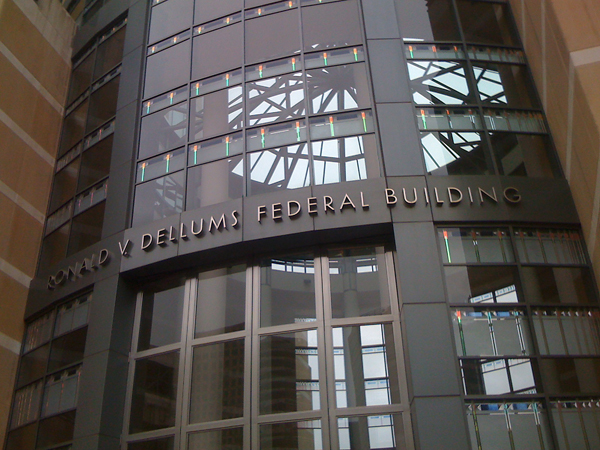
I’ll just leave it at that, and move on to a bit more history, including the creation of the Federal Building below that bears his name…

oakland city federal building, ron dellums

WHITE FLIGHT

“In the postwar decades, Oakland suffered through many of the same urban crises that afflicted other cities: chronic unemployment, racial tensions, physical deterioration of the central district and some once-proud neighborhoods… Oakland’s decline seemed self-perpetuating, since a lack of faith in the city meant an acceleration of its abandonment.” (Oakland: The Story of a City, Beth Bagwell)  Let’s just say things looked pretty bleak back then.  But two significant things happened in the re-development of Oakland:

  1. BART
  2. City Center

The Bay Area Rapid Transit System was conceived in the early 1950’s to replace the already demolished Key Rail System.  “In 1951, the State Legislature created the 26-member San Francisco Bay Area Rapid Transit Commission, comprised of representatives from each of the nine counties which touch the Bay. The Commission’s charge was to study the Bay Area’s long range transportation needs in the context of environmental problems and then recommend the best solution.” (BART History) After years of study, the commission recommended development of high-speed rapid rail network linking commercial and suburban centers in five counties (San Francisco, Alameda, Contra Costa, Marin and San Mateo – who both would later withdraw).

I won’t go into all the history of BART’s development, because it is extensive and you can find exhaustive information on their website (see link above).  But according to our tour guide Renate, it was relatively easy to build BART through the heart of downtown Oakland in the late 60’s and early 70’s because so many buildings at the time had become neglected and/or abandoned.

Passenger service began on September 11, 1972 and the importance of this transportation system to Oakland’s eventual revitalization cannot be understated.  In fact, it is still being touted today… “Oakland’s central business district has 10 million square feet of Class A office space and is served by two BART stops.  By comparison, San Francisco’s central business district has 40 million square feet of Class A office product and is served by two BART stations.  The foundation is in place for Oakland to experience tremendous growth.” (2009 Oakland’s Uptown/Downtown CBD pamphlet)

After BART came City Center. Initially consisting of just two buildings (the Wells Fargo building built in 1973 and the Clorox building opened later in 1976), City Center now comprises five buildings and 1.5 million square feet of Class A office and retail development, including the Ronald V. Dellums Federal Building complex which was opened in 1994.

Consisting of two identical towers connected by an elevated sky-bridge, the Federal Building, though bearing the name of our current mayor, can really be attributed to the efforts of Lionel Wilson, the first African American mayor of Oakland, who served from 1978 until 1990.  In the early 1980’s, the federal government decided they needed a West Coast presence and it was Mayor Wilson who sold them on Oakland… namely for the price of free.  Though BART then provided easy access, much of downtown Oakland was still deserted at the time.  Where the new Federal Building now stands, an old abandoned department store once existed, sold to the federal government for something like a single dollar.  Who could refuse that deal?

With its opening in 1994, including an IRS office and Veteran’s Administration office, the new Federal Building brought 1700 new employees to downtown Oakland, virtually overnight. Thus began the revitalization of Oaktown…

“Fight or be slaves!”

Ok, let’s see…. we left off talking about the Pullman Porters of West Oakland.  These men were part of the first wave of African Americans migrating to California in search of better opportunities.  C. L. Dellums was one of these men.

“C.L. Dellums’ father was born in slavery, just two and a half months before Juneteenth (June 19), 1865, the date emancipation belatedly came to Corsicana, Texas. C.L. left Texas for California determined to become a lawyer, declaring that ‘I don’t plan to wear these overalls for the rest of my life.’ But in the 1920s there were few decent jobs for African Americans, and Dellums went to work as a Pullman railroad porter as a last resort, reading constantly to learn about the world and ideas.” [‘Fight or be slaves!’ by Albert Lannon]

He was exemplary of the first generation of blacks in the Bay Area who found their options more limited than they had imagined. Though the porter jobs provided many with steady work and income, the conditions were not ideal…  wages were low and employees of the Pullman Company were dependent upon tips from white customers to supplement their income.  They were also required to pay for food, uniforms, and lodging out of their wages, and also were uncompensated for additional work time spent in preparatory and clean-up duties.

As a result of these conditions, the porters organized themselves into the first African American labor union in the United StatesThe Brotherhood of Sleeping Car Porters.  First organized in 1925 by a group of 500 porters in Harlem, after years of having organizing efforts squelched by the company, they not only launched their campaign in secret, but also chose A. Philip Randolph, “an outsider beyond the reach of the Company, to lead it. The union chose a dramatic motto that summed up porters’ resentment over their working conditions and their sense of their place in history: ‘Fight or Be Slaves'”.

Randolph realized the need for a West Coast counterpart in organizing the Pullman Porters and chose C. L. Dellums, designating him Vice President of the Brotherhood of Sleeping Car Porters in 1928, at which time he was promptly fired from the Pullman Company.  It took more than a decade for them to have any real negotiating success, but in 1937 the Brotherhood finally won a contract with the Pullman Company.  “It was the first economic agreement ever signed between African Americans and a white institution. It sent the message of unionism to the black community nationally.” [‘Fight or be slaves!’ by Albert Lannon]

Uncle of former congressman and current Oakland City Mayor Ron Dellums, C.L. became a major figure in Oakland’s African American Community, personally exemplifying the possibility of black empowerment.  He went on to serve as western regional director of the NAACP, and later was also instrumental in the organization of the 1941 March on Washington.  After his death, the new Amtrak station at Jack London Square was dedicated in his honor, a statue of Dellums adorning the entrance.

His nephew Ron Dellums is exemplary of the greater opportunities available to the second generation of African Americans in the Bay Area… thanks to the tireless efforts and sacrifices of those who came before them.  I’ll try to get more of this history up in the next few days, but again, I’ll just mention that most of this information was provided free of charge on Oakland’s city walking tour “New Era / New Politics” which will be offered one more time later this month… February 27th at 10am (meet on steps of AAMLO).

The rise of a black middle class…

I took a city walking tour about a week ago in honor of Black History Month… titled “New Era / New Politics” and offered by the city of Oakland free of charge, it’s one of eight walking tours covering different topics in Oakland’s history.  The tours typically only run during summer months from May through October, but this one exclusively is offered three times during February to celebrate the contributions of influential African American leaders to Oakland’s development.  In fact, this tour was developed and first offered in conjunction with the opening of the African American Museum and Library at Oakland (AAMLO) in 2002.  We met on the steps of the AAMLO to begin our tour…

Our guide, Renate, began with a broad statement…  that Oakland, as a medium-sized American city, is unique in its diversity, and specifically its history of diversity. And she attributed this difference primarily to the success of the Pullman Porters.

For those not familiar with the Pullman Porters, a bit of history… In the late 1800’s, Oakland was designated as the western terminus of the Transcontinental Railway.  This railway system connected the eastern portion of the United States with the new western states, and more specifically the burgeoning city of Oakland directly with the more established metropolis of Chicago.  Around this same time, George Pullman, an inventor and entrepeneur based in Chicago, developed railway sleeping cars, designed to offer trans-continental transport in a manner of luxury previously unavailable.  His first cars – containing sleeping berths, curtains, carpeting, upholstered chairs, and washrooms at each end – were called Palace Cars, and were marketed with the motto “luxury for the middle classes.”

To complement this experience of luxury, Pullman exclusively hired African American men to staff his cars as porters and wait-staff, believing that they were well-suited for these positions as “people who had been trained to be the perfect servant[s].” Though the jobs were not particularly well-paying and advancement was limited, they afforded many steady employment and income, as well as the ability to travel… novel concepts for blacks in that day and age in America.  By the 1920’s and 30’s the Pullman Company was one of the largest employers of blacks in America, many of whom lived and worked in West Oakland around the now defunct 16th Street Central Station.

When California joined the ranks of the “united” states in 1850, it did so as a free state with a constitution that abolished slavery.  But despite this, our tour guide Renate informed us that prior to the 1920’s, there were very few blacks in California.  It wasn’t until the railway system was completed and the relative prosperity of the early 20th century offered greater mobility that the first migratory wave of African Americans settled in California, many coming to Oakland in search of greater opportunities.  Throughout our tour, Renate emphasized the differences between this first generation of blacks in the Bay Area, those who had roots in the east and south, and the second generation, their offspring born and raised in California.  The opportunities available to the first generation would be fewer than expected… those coming with hopes of obtaining university educations to establish careers as doctors and lawyers were frustrated to find themselves excluded in ways that had not been expected in the reputedly liberal state of California.

But the Pullman Porters jobs allowed many families to settle in West Oakland… employees were actually required to establish residency within running distance of the train station. These early entrants into the formal blue collar workforce of America took hold of a rung from which they propelled themselves into the mainstream middle class of American Society (Rising From The Rails by Larry Tye).  One of my favorite quotes from the tour was something along the lines of the following:

Once you have an educated middle class,”historical consciousness” comes into being.

With that consciousness, a slew of early black leaders were able to assess the quality and context of their current station in life, and envision a different future possible.  A handful of these visionaries formed the East Bay Negro Historical Society, the remnants of whose archives now form the foundation of AAMLO’s archives.

There is much more to tell, but I am finding it exceedingly difficult to write this from Mexico.  Lo siento.  You can imagine how the gently swaying palms and lapping turquoise waters do distract… Forgive me.

For those interested in delving into this on their own (or too impatient to wait for my vacation-scheduled recap – can you say mañana?), the New Era / New Politics tour will be offered one more time this month… on Saturday the 27th, meets at AAMLO, starts at 10 am.