Category Archives: uptown

The Paramount Theatre ~ an Art Deco dream

paramount theatre oakland, art deco murals

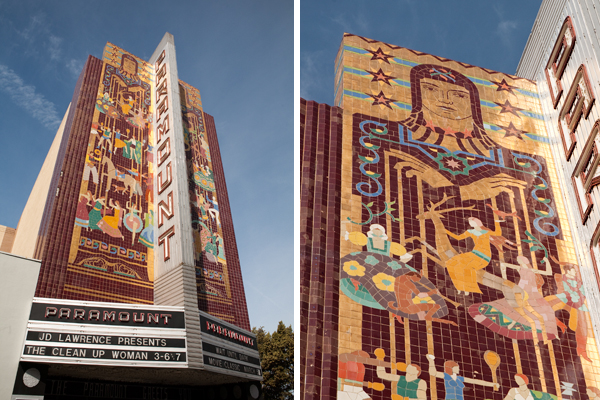
The Paramount Theater was conceived around the same time as the Fox Oakland Theater, during the heyday of grand movie palaces. I wrote about this era in my post on the Fox, so I won’t repeat it all here. But I will say that the Paramount followed the Fox’s opening in 1928 by a couple of years, in which our country seemingly turned upside-down in the blink of an eye.

On Black Tuesday, October 29, 1929 the Great Stock Market Crash of Wall Street occurred, thrusting the previously ebullient nation into a decade-long economic downturn. There are various theories about the relationship of the Crash to the subsequent Great Depression, but one thing is certain… the amount of investment capital available for large expensive projects basically dried up. At that time, plans for the Paramount were already well underway… investors were in place, including the large studio company Paramount Publix (in those days, the individual studio film companies owned their own theaters to show their own films), and the renowned Art Deco architect they had hired, Timothy Pflueger, had completed his design plans.

Then “The Crash” occurred, literally wiping out $14 billion in one day. Stocks continued to slide in the following days, bringing losses for the week to over $30 billion (and keep in mind, these are 1930 dollars!) Ahhhh… those clever traders on Wall Street. What would we do without them?!

Fortunately, the investors behind the new theater were not heavily staked in Wall Street. They had the cash to complete the project and decided to move forward, gambling that they would never again have access to such cheap materials and labor. Talk about foresight. The Paramount Theatre was built in one year and five days for approximately $1 million. Amazing!

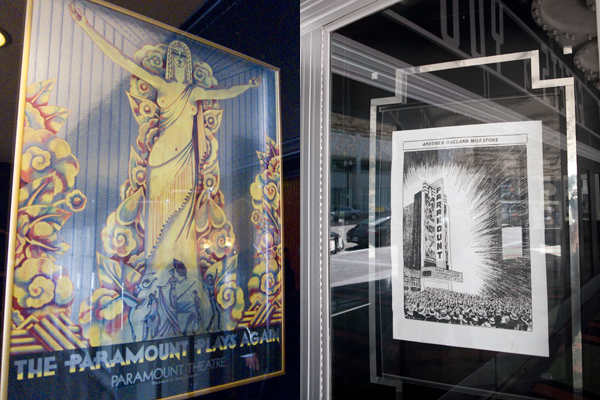
The theater’s grand opening was held on December 16, 1931 and, despite the depressed economy, thousands thronged to the opening, including Hollywood’s elite stars who travelled by train from Los Angeles.  Below is the opening night poster (left) and a representation of the scene on opening night from a local newspaper which reads “Another Oakland Milestone” (right).
paramount theatre posters, art deco poster

When the Paramount first opened, a night at the Theatre included more than just a movie… it was a full evening of vaudeville entertainment including dancing by the Sunkist Beauties (the West’s answer to New York City’s Rockettes), symphony performances, songs played on the theater’s “Mighty Wurlitzer” organ, and film shorts. Unfortunately, in subsequent months ticket sales were too low to keep the theater profitable, and just six months after it opened, the Paramount closed its doors.

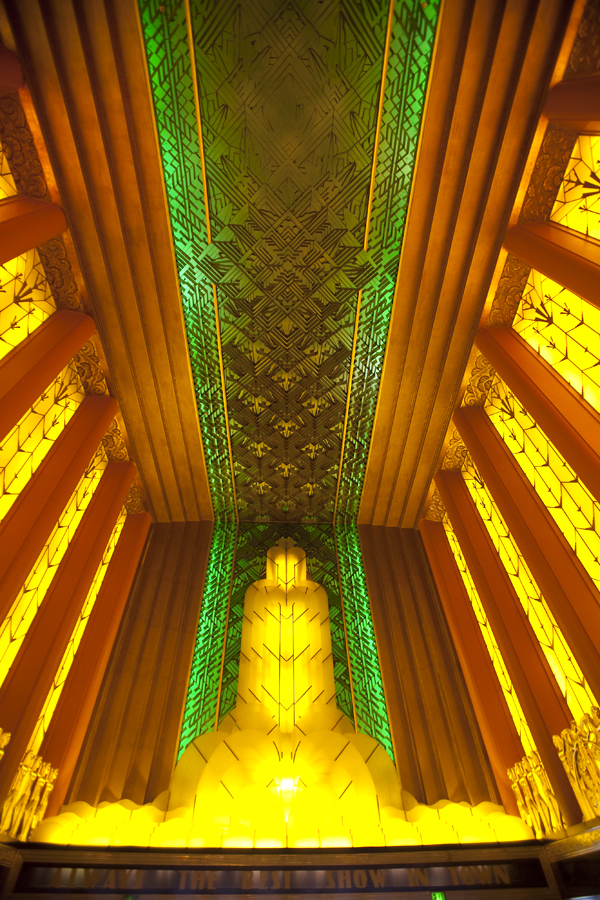
It reopened the following year in 1933, but with a no-frills sensibility, devoid of the live entertainment (no dancers, no symphony), and without all of the decorative lighting that makes the space so incredibly beautiful (the electricity was too expensive). To give you an idea of what some of the decorative lighting actually looked like (now fully restored to its original appearance), just take a look at this lobby…
art deco lighting, art deco redwood forest, paramount oakland lobby

What does it look like to you? Perhaps a redwood forest? Because that’s exactly what Pflueger intended. The green light in the ceiling, reflected through an intricate pattern of metalwork (a form that he patented called “silver-fin” though it was made of steel) represents the leaf canopy; the panels of gold, left and right, with their signature Deco zig-zag motifs represent sunlight streaming through the trees; the terra-cotta colored columns are the tree trunks; and the focal piece of it all is the enormous “Fountain of Light,” made of etched glass in a similarly quintessential Deco arrangement.

Ok… there’s much more to tell, and many more photos, but that’s all I’ve got time for today. Please check back tomorrow…
The Paramount Theatre – for frugalistas

I asked a friend the other day if he’d ever seen the inside of the Paramount Theatre. He smirked slightly and rubbed his forefingers and thumb together, indicating that this establishment was a bit too steep for his price-line. But while many shows are fairly expensive ($50 and up, but usually worth it in my humble opinion), there are plenty of ways to experience this incredible venue for a lot less cash. And you really should. It’s one of those things-you-should-do-before-you-die kind of things.

paramount theatre, paramount oakland, movie night at Paramount

The best ways to see the Paramount on the cheap – though trust me you’ll want to put on your finest dandies and make a night of it, even if you are on a budget – are either of three ways, all of which I have done and enjoyed immensely:

  1. Volunteer as an usher – I mentioned this in my short post about touring the Paramount… pretty much anyone can usher shows here for free.  It simply requires that you complete a few prerequisites, such as taking the tour at least once ($5 fee is waived), attending a volunteer meeting, and having access to black dress clothes & shoes along with a nice white shirt.  You also have to usher a few “required” shows before you can pick your own.  It’s definitely a process, but for those who have more time than green, it’s a great option… especially if you love seeing a lot of music.  And it’s actually quite fun.  The theatre has an unusual historical opera-house method of seat numbering, so it’s really pretty tricky to figure out where one’s seats are.  The ushers provide this valuable service, and offer historical tidbits to inquiring patrons.  You generally get dismissed one to two songs into the headline act, at which point you can find a seat in the back or make your way to the back of the floor to enjoy the rest of the show.
  2. Take the tour – only $5.  Offered twice every month on Saturday mornings.  If you catch them on a day when there’s no performance, they’ll take you up on stage, under the stage, the whole shebang!
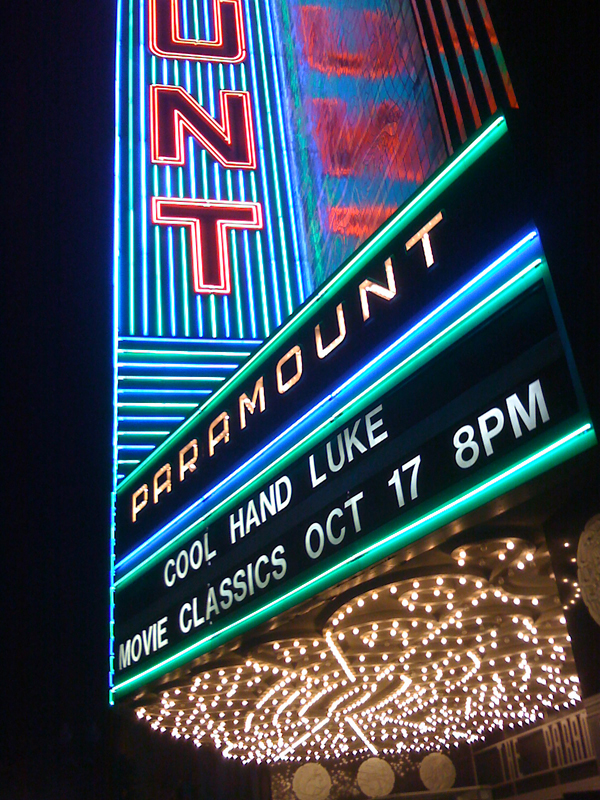
  3. Classic Movie Night – this too only $5!  I’ve said it before… this is the best deal in town.  And includes fun stuff like Jim Riggs performing on the mighty Wurlitzer, a hosted game of Deco-win, and more.  Last movie I saw at the Paramount was Cool Hand Luke, in memorium for Paul Newman.  What a great movie, and what a handsome man!!!  ol’ blue-eyes… (sigh)

Then of course, there’s always the option of buying tickets to premiere events. I’ve seen some shows of a lifetime at this venue… Tom Waits, Lucinda Williams, Leonard Cohen, The Flaming Lips with Beck, WilcoDamn I love this place! And you should know that it’s not just pretty to look at.  The Paramount is currently owned, as it has been for the last 38 years, by the Oakland Symphony who purchased it explicitly for its acoustics.  But more on that tomorrow… I think I just decided that I’m rambling at this point and need to shelve some of this material for tomorrow.  I’ve got tons of photos (I took over a hundred on the tour in addition to ones I already had in the archives)… there’s history galore, and so much extravagant Art Deco craftsmanship it will stump you speechless.  I told you it was a lot!  Please stay tuned…

Floral Depot ~ Fantastique!

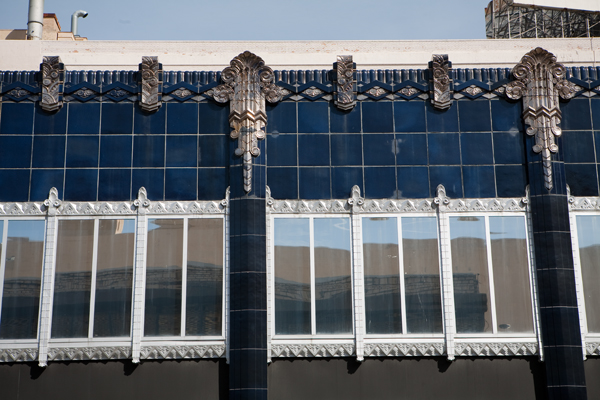
Here’s another stunner… the Floral Depot Building at Telegraph and 18th, just across the street from, and in late afternoon literally in the shadow of, the mighty Fox Theater. Also clad in terra cotta – both the cobalt blue tiling and silver ornamentation, comprising Aztec-style trim interjected with periodic “sprays” of silver reputedly designed to resemble waterfalls – this Art Deco beauty is one of Oakland’s finest. The City’s Cultural Heritage Survey cites it as an “outstanding architectural example of extreme historical importance.” I dub her the crown jewel of Oakland, the resemblance unmistakable to me.

terra cotta ornamentation, floral depot building, flora restaurant oakland

terra cotta ornamentation, floral depot building, flora restaurant oakland, oakland art deco buildings

floral depot building, flora restaurant oakland, uptown nightclub oakland art deco buildings

terra cotta ornamentation, floral depot building, flora restaurant oakland, oakland art deco buildings

Designed by architect Albert Avers and built in 1931, the building takes its name from the old Floral Depot once housed there. See original sign below (image borrowed courtesy of DougPants.org), followed by the renovated sign for my favorite restaurant in all of the East Bay, the incredible Flora, opened in late 2007 by the proprietors of the highly successful Doña Tomas in Temescal.

floral depot building, Oakland Floral Depot Building

Oakland Floral Depot Building, flora restaurant oakland

Thomas Schnetz and Dona Savitsky took a chance on this stretch of Telegraph well before the grand re-opening of the Fox that many hail as the beginning of Uptown’s resurgence.  I would argue that the opening of their prohibition-era-inspired Flora marks the beginning instead, becoming a “symbolic anchor” in an area clearly in transition, “much like San Francisco’s Zuni Cafe did when it opened more than 25 years ago on what was then a depressing stretch of Market Street.” (Flora paves the way… by Michael Bauer)

I’ve written about Flora before in my first post on Art Murmur (First Friday Frolic! ~ ART MURMUR), and I’m sure I’ll write about it again because it’s just that good. I don’t care if it makes me sound like an arugula-munching, latte-sipping liberal. The food & drinks here are simply divine… classic American fare with a California-nouveau twist, inspired by the best seasonal & organic ingredients. Make a reservation, or get there early for a seat at the bar… watching the suspendered-bartenders work their magic is half the fun.

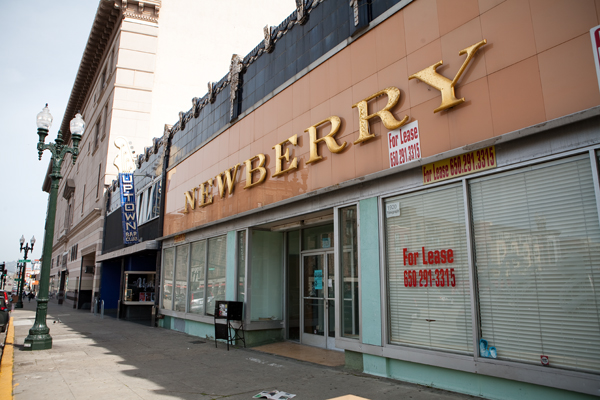
But let’s get back to the building… Other early residents of this building include the J.J. Newbury Department Store, a nationwide five-and-dime chain prevalent during the 20th century. Now closed and available for lease, the old logo still remains…

floral depot building, JJ newbury oakland, uptown nightclub, oakland art deco buildings

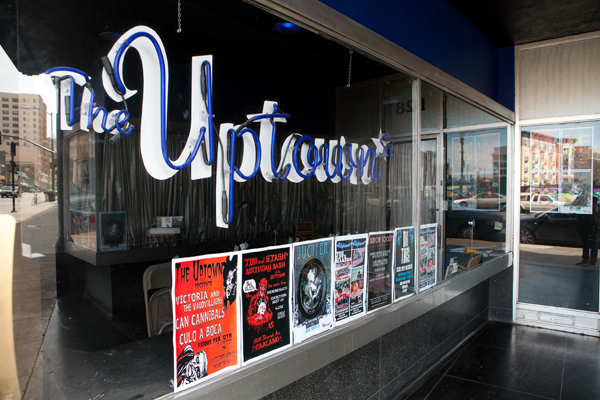
Next door, you’ll see the Uptown Nightclub, also opened in late 2007. Embarrassingly, I have yet to see a show here, but they get great props on Yelp, and I’m planning a visit next week in celebration of Women’s History Month. They’re hosting two nights of The Vagina Monologues by Eve Ensler, a benefit fundraiser for her organization V-Day which, to date, has raised something like $50 million dollars in support of groups working to ending violence against women and girls worldwide.  Woah. Please join me, or check out the Uptown’s Calendar for other cool shows…

floral depot building, uptown nightclub oakland, art deco building

Art Deco & Terra Cotta

I am displaying my naiveté here, but I always thought that terra cotta was that fired earthen-colored clay they made cactus planters out of… cheap and not very pretty.  But as I delve into more of the architecture of Oakland, “terra cotta” continues to pop up in unexpected places. Unquestioningly, I’ve referenced it in posts on:

And today’s building features terra cotta like you’ve never seen it!  Just look at this…

Mary Bowles Building, Oakland Art Deco Building, Blue-green Terracotta

So what’s the deal with this terra cotta stuff?

Well, to begin, my first statement was essentially correct.  Terra cotta (or terracotta, or terra-cotta) is Italian for “baked earth.”  Yes!  It’s basically a clay-based material that can be molded in any variety of ways while “raw,” to be later heated to its final ceramic state in a kiln, or in ancient times on a hearth or by the sun.  The material has been used for centuries in art, pottery, water pipes, bricks, roofing tiles, and architectural embellishments. While the color can vary widely, everything from yellow to gray to pink (which explains some of the references above), the more common clays contain iron which produces the orange or reddish hue.  And like our simple cactus planters, the finished product is light, relatively strong, and somewhat porous, which makes it non-waterproof unless glazed.

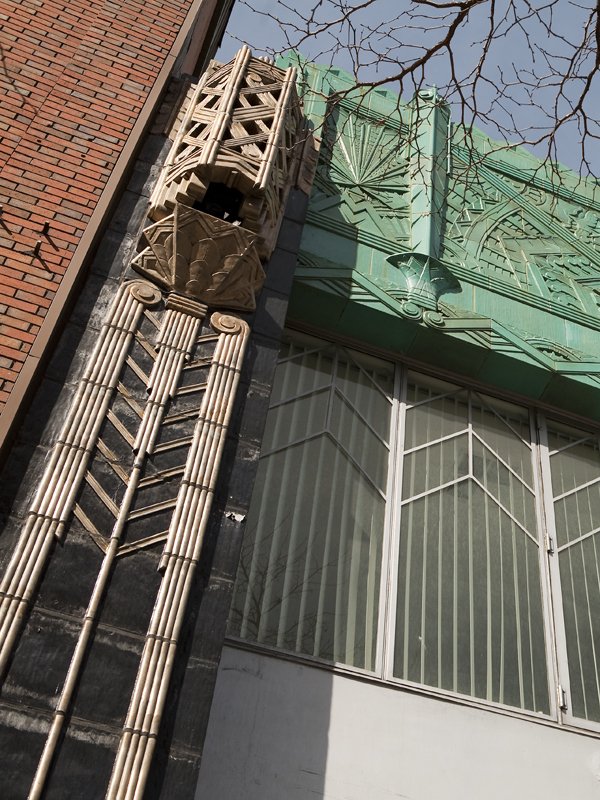
For architectural decoration, terra cotta has advantages over other materials such as marble or stone sculpture, being lighter, cheaper, and able to be incorporated into series production using mold-making techniques, similar to cast plaster (we’ll get to this in my upcoming post on the Paramount). Though early architectural applications used the unglazed material, later developments incorporated glazing, both for protection from the elements, and to allow for greater variety of finishes, including faux metal patinas, and gorgeous coloring as in our lovely blue-green example above from one of Oakland’s Art Deco lovelies.

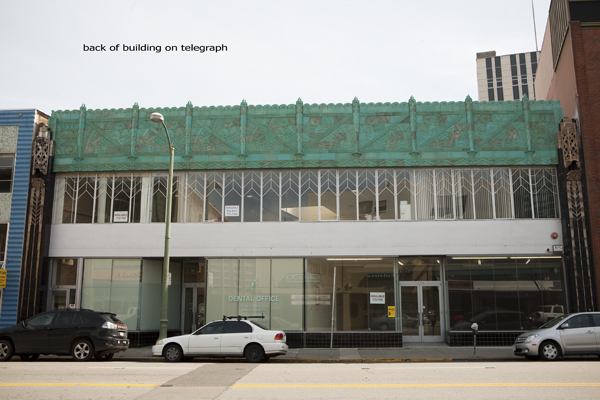
Built in 1931, designed by Douglas Dacre Stone, and later restored in 2004, the Mary A. Bowles Building is located on Broadway at 17th near where Telegraph and Broadway unite. The building spans the block, its backside on Telegraph just as pretty as the front.

Mary A. Bowles Building, Oakland Art Deco Buildings, Terra Cotta Frieze

Mary A. Bowles Building, Oakland Art Deco Buildings, Blue Green terracotta

The terra cotta panels with their repeating swirls of organic shapes and sunburst patterns, as well as the geometric zig-zag patterns on the windows below are classic Deco. Check out the detailing on the metallic flourishes at each end… also likely molded terra cotta with a faux silver finish (similar to the Floral Depot building which we’ll also get to in coming days).

terra cotta ornamentation, oakland art deco building

terra cotta ornamentation, art deco buildings oakland

One more…
Art Deco Oakland Building, building designed by Douglas Dacre Stone

I was unable to find any information on Ms. Bowles and why she might have this building named after her, but I did find this obituary for her husband. If anyone has more information, please send my way…

Philip Ernest Bowles, Mary A. Bowles